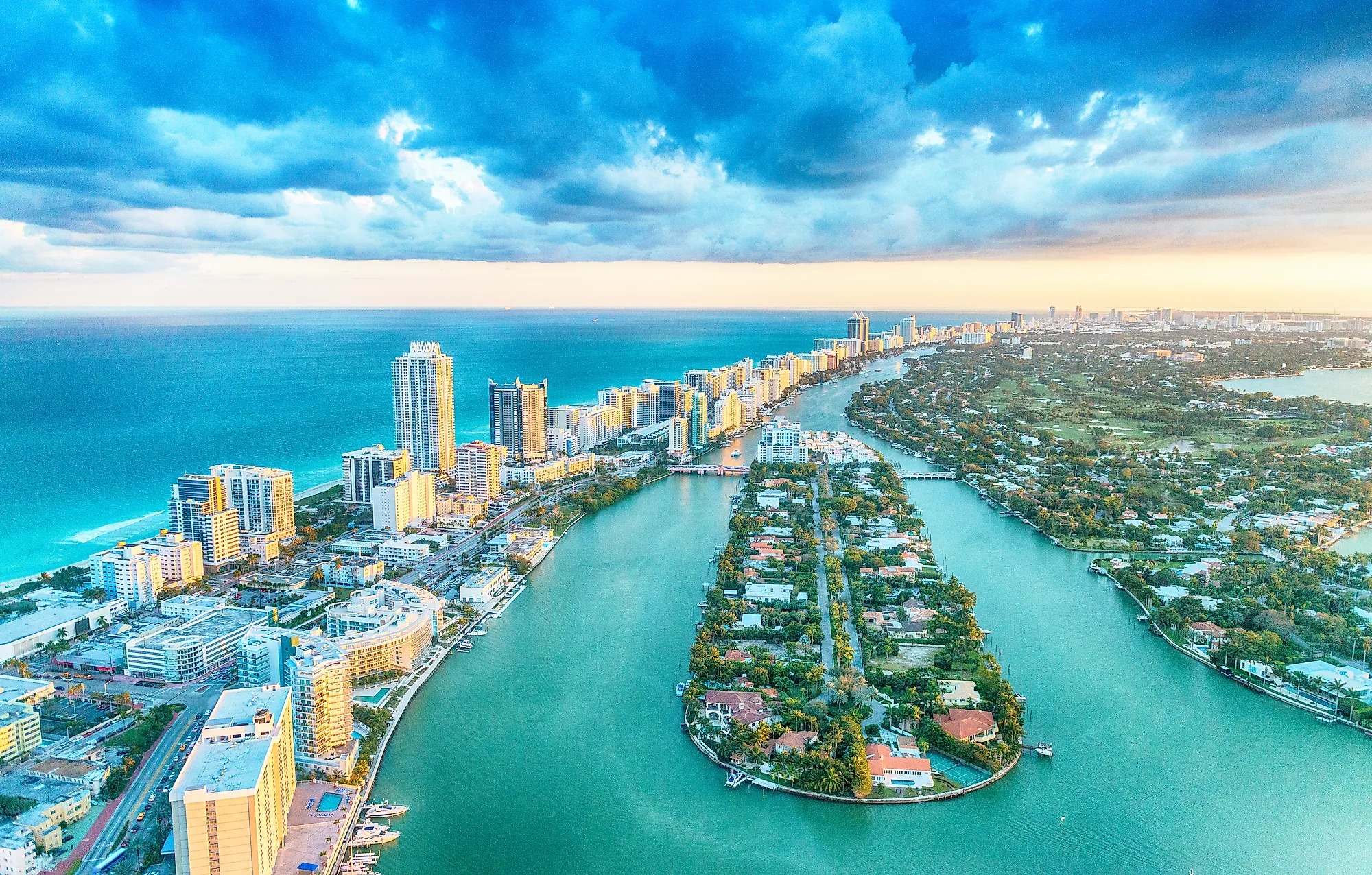
The Miami Beach Convention Center Corridor
The Miami Beach Convention Center anchors the largest exhibit floors in the metro, and the hotels around it, including Loews Miami Beach, Fontainebleau Miami Beach with its Coastal Convention Center, Faena Forum, Andaz Miami Beach, and Eden Roc Miami Beach, absorb the meeting and hospitality programs that ring a major show. A booth built for this corridor has to plan around causeway traffic onto the barrier island, because every truck, every crew van, and every late delivery funnels across a limited number of bridges at the same time other shows and hotel guests are moving.
Labor here is scheduled around convention center jurisdiction rather than hotel house rules, and that distinction changes who can touch a crate, who can plug in a monitor, and who supervises electrical hookups on the floor. Exhibitors who assume beach venues behave like their downtown counterparts usually discover the difference during move-in, when a crew that was fine unloading at a hotel loading dock is not credentialed to do the same work inside the convention center hall.
Downtown and Biscayne Bay Venues
Downtown Miami carries a second, distinct venue cluster centered on the James L. Knight Center, JW Marriott Marquis Miami, InterContinental Miami, Hyatt Regency Miami, Hilton Miami Downtown, and W Miami, with Miami Marriott Biscayne Bay and DoubleTree by Hilton Grand Hotel Biscayne Bay Miami extending the footprint north along the water. These properties run smaller general session and hotel-ballroom exhibit programs more often than the mega-floor shows the beach hosts, which means the labor call, the loading dock capacity, and the marshaling approach are all sized differently.
Downtown's grid of one-way streets and construction detours around Brickell make the last mile of freight delivery its own planning problem, separate from the interstate approach into the metro. A crew that has the highway timing right but has not scouted the actual downtown loading dock queue still arrives late, because the bottleneck is usually the final few blocks, not the drive from the airport.
Wynwood as an Independent Event Campus
Mana Wynwood operates as its own event campus rather than an extension of downtown or the beach, and it draws a different exhibitor mix, often experiential, product launch, and brand activation work rather than traditional trade show floors. Its warehouse-scale buildings and open yard space give production teams more flexibility for custom builds and large-format installs than a conventional convention center footprint allows, but that same flexibility means less standardized house infrastructure to lean on.
Because Wynwood sits inland from the beach and north of the downtown core, crews staging for a Mana Wynwood program plan around a different set of surface streets and a different arrival window than a beach or downtown show, and coordinating labor and freight across both zones in the same week is a real scheduling constraint exhibitors with multi-venue programs need to account for.
Miami routing and venue mix
Miami sits in the Downtown, Brickell, and Biscayne Bay Core. Supports downtown conference centers, convention hotels, investor and product-launch events, sponsor activations, and high-density corporate programs tied to Biscayne Bay and the urban core.
The venue comparison often starts with Miami Beach Convention Center, then expands into delivery timing, guest movement, and whether the district gives the crew enough room to recover from late changes.
Where the district helps or hurts the schedule
Beach corridors usually need more sensitivity around hotel guests, limited curb activity, and cross-town travel. Downtown rooms put more weight on garage access, elevator timing, and business-day traffic. Airport-west and Doral programs can simplify freight but still need clean paperwork and service-order discipline.
Miami should be chosen because it supports the event's operating needs: where freight can arrive, how quickly a supervisor can reach the room, what hotel or sponsor activity surrounds the show, and how much buffer the strike plan requires.
Planning decisions to lock early
General Contractor Services is the next practical question when Miami is part of the assignment because service scope determines how much labor, logistics, and floor authority the corridor needs.
Confirm the primary venue, receiving path, staging options, parking or marshaling expectations, hotel activity, and who has authority to approve field changes before the crew arrives.
- Name the building and receiving path before labor assumptions are finalized.
- Match supervisor coverage to travel time and likely change volume.
- Build strike timing around the district, not only the show close time.
Cost drivers for Miami, FL
Miami, FL pricing should be tested against the conditions that actually create cost: freight release timing, material handling exposure, labor depth, overtime risk, graphics changes, utility orders, AV testing time, and how much supervision the room needs once multiple vendors are active.
Miami Beach Convention Center can shift those costs quickly. A room with tighter access, more technical dependency, or heavier guest-facing pressure may need earlier approvals and more conservative crew planning than the same service scope would require in a simpler ballroom setup.
Stakeholder handoffs for Miami, FL
Marketing, sales, operations, procurement, venue contacts, and the show organizer usually look at miami, fl from different angles. The handoff map should show what each group must approve, what can still change, and which person has authority when a field decision affects cost or timing.
General Contractor Services becomes useful when that handoff map needs a clear operating owner. It keeps the service scope connected to labor calls, freight handling, service orders, and final punch work instead of leaving each decision in a separate thread.
Field notes for the next South Florida date
Miami, FL should leave behind more than a finished room. Supervisor notes, freight condition, missing parts, graphics wear, labor timing, lead-capture issues, and stakeholder feedback should be captured while the show is still fresh.
Brickell, Miami context matters on the next calendar too. What worked in one corridor may need a different receiving plan, schedule buffer, or staffing posture at the next venue, especially when the program moves between Miami-Dade and Broward.
- Record actual install and strike timing, not only the planned schedule.
- Document freight, graphics, AV, and service-order issues while the team can still see the cause.
- Carry venue-specific lessons into the next show brief before a new estimate is approved.
First hour on site for Miami, FL
The first hour should confirm the receiving condition, crate or rental inventory, booth footprint, utility status, graphics priority, and the communication path to the service desk. For miami, fl, that early check prevents the crew from building around a missing decision.
A supervisor should also verify whether the plan still matches the room. If the aisle condition, rigging note, power drop, storage option, or sponsor requirement has changed, the adjustment needs to be made before labor is buried in work that will have to be touched twice.
Approval trail and closeout discipline
Miami, FL works better when approvals are visible: final artwork, structural assumptions, outbound labels, rental return condition, AV ownership, service desk notes, and any client changes that affect cost. The paper trail protects the opening and the post-show conversation.
Closeout should produce a cleaner next estimate. The team should know which materials traveled well, which timing assumptions were wrong, which venue requirements created friction, and whether the same service scope should be repeated, simplified, or upgraded for the next South Florida date.